Impact of Sevoflurane on Iron Homeostasis and Ferroptosis
January 14, 2026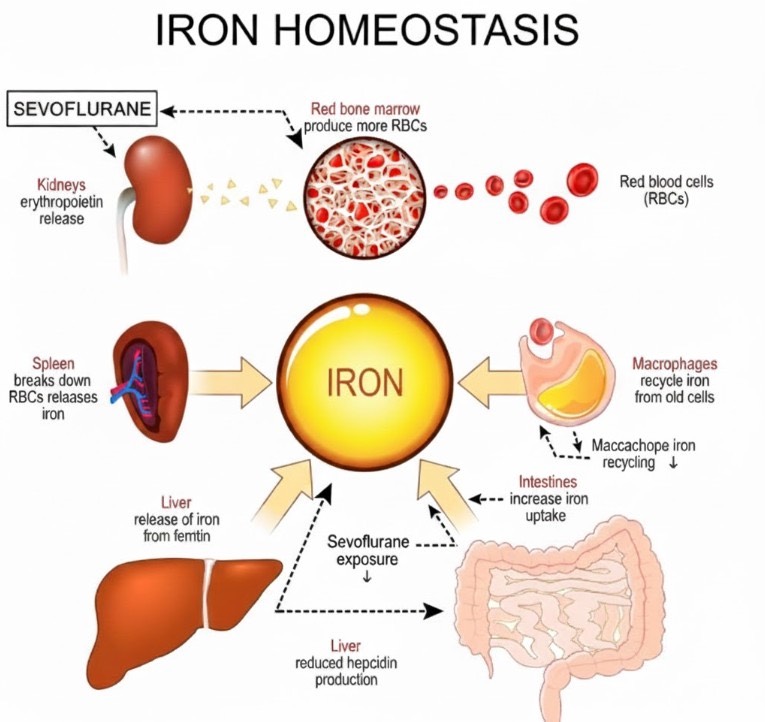
Iron is essential for normal brain function, supporting processes such as energy metabolism, DNA synthesis, and cellular signaling. Consequently, disruptions in iron homeostasis can lead to neurological dysfunction.1 Ferroptosis, an iron-dependent form of regulated cell death characterized by lipid peroxidation, has emerged as a key mechanism implicated in multiple brain disorders, including brain injury and neurodegenerative diseases such as Alzheimer’s disease, Parkinson’s disease, stroke, brain aging, and brain cancer.2 Additionally, at high concentrations or repeated doses, inhalational anesthetics can cause neurotoxicity and cognitive impairment. Research suggests that iron dysregulation and ferroptosis may contribute to these effects, with experimental studies showing sevoflurane can cause iron overload, impaired antioxidant defenses, and neuronal death, and that cognitive deficits can be alleviated by ferroptosis inhibitors or iron modulation. These findings in sevoflurane research highlight iron homeostasis and ferroptosis as promising therapeutic targets for protecting the vulnerable brain during the perioperative period.
A 2021 pre-clinical study from China categorized 30 male mice into three groups: control, sevoflurane, and iron deficiency + sevoflurane. Iron-deficient mice were fed low-iron food for one month, and serum iron levels were collected to confirm their iron-deficiency status. After relevant behavioral tests, the research group performed immunohistochemistry studies on the animal subjects. Across various behavioral and biochemical analyses, sevoflurane exposure induced significant cognitive impairment in mice, accompanied by significant disturbance of iron homeostasis in the hippocampus and cortex. Sevoflurane led to marked iron accumulation, evidenced by increased tissue iron content, upregulation of H- and L-ferritin (which are responsible for iron storage), increased reactive oxygen species (ROS) production, and downregulated the expression of TfR1, an iron import protein in the cortex and hippocampus.
This iron overload was associated with increased oxidative stress, mitochondrial dysfunction, neuronal apoptosis, and Alzheimer’s-like pathology, including elevated BACE1 expression and Aβ accumulation.3 Importantly, pre-existing iron deficiency consistently mitigated sevoflurane-induced iron accumulation, oxidative damage, and cognitive decline, supporting the idea that changes in iron homeostasis are a central mechanism underlying sevoflurane-induced neurotoxicity.3,4
These findings support the results of an earlier murine study, where the anesthetics ketamine and sevoflurane were found to induce robust cytosolic and mitochondrial iron overload in hippocampal neurons and in the hippocampus of developing and aged rodents by disrupting iron-regulatory pathways and enhancing mitochondrial iron import. This dysfunctional iron homeostasis triggered mitochondrial dysfunction, oxidative stress, and iron-dependent ferroptosis, which ultimately led to neuronal injury and long-term cognitive deficits. Importantly, iron chelation, or the inhibition of iron uptake pathways, prevented iron accumulation, rescued mitochondrial and neuronal function, and significantly ameliorated anesthesia-induced memory impairments, identifying iron overload as a central mechanism of anesthesia-induced neurotoxicity.5
Collectively, accumulating preclinical evidence indicates that sevoflurane and similar general anesthetics may disrupt cerebral iron homeostasis, potentially leading to iron overload, oxidative stress, mitochondrial dysfunction, and ferroptosis-driven neuronal injury (particularly within the hippocampus). These iron-dependent mechanisms provide a unifying biological framework that links extended anesthetic exposure to cognitive impairment and Alzheimer’s-like neuropathology across vulnerable developmental and aging periods. Importantly, the consistent neuroprotective effects of iron restriction, chelation, and ferroptosis inhibition portray iron metabolism as a modifiable risk factor instead of an unavoidable consequence of anesthesia. Future translational studies are needed to determine whether perioperative modulation of iron homeostasis can safely mitigate anesthesia-induced neurotoxicity to improve long-term cognitive outcomes in at-risk patient populations.
References
1. Ganz T. Systemic Iron Homeostasis. Physiological Reviews. 2013;93(4):1721-1741. https://doi.org/10.1152/physrev.00008.2013
2. Weiland A, Wang Y, Wu W, et al. Ferroptosis and Its Role in Diverse Brain Diseases. Molecular Neurobiology. 2018;56(7):4880-4893. https://doi.org/10.1007/s12035-018-1403-3
3. Wang M, Zuo Y, Li X, et al. Effect of sevoflurane on iron homeostasis and toxicity in the brain of mice. Brain Research. 2021;1757:147328. https://doi.org/10.1016/j.brainres.2021.147328
4. Miao M, Han Y, Wang Y, et al. Dysregulation of iron homeostasis and ferroptosis in sevoflurane and isoflurane associated perioperative neurocognitive disorders. CNS Neuroscience & Therapeutics. 2024;30(2). https://doi.org/10.1111/cns.14553
5. Wu J, Yang JJ, Cao Y, et al. Iron overload contributes to general anaesthesia-induced neurotoxicity and cognitive deficits. Journal of Neuroinflammation. 2020;17(1). https://doi.org/10.1186/s12974-020-01777-6