Sleep vs. General Anesthesia
July 27, 2026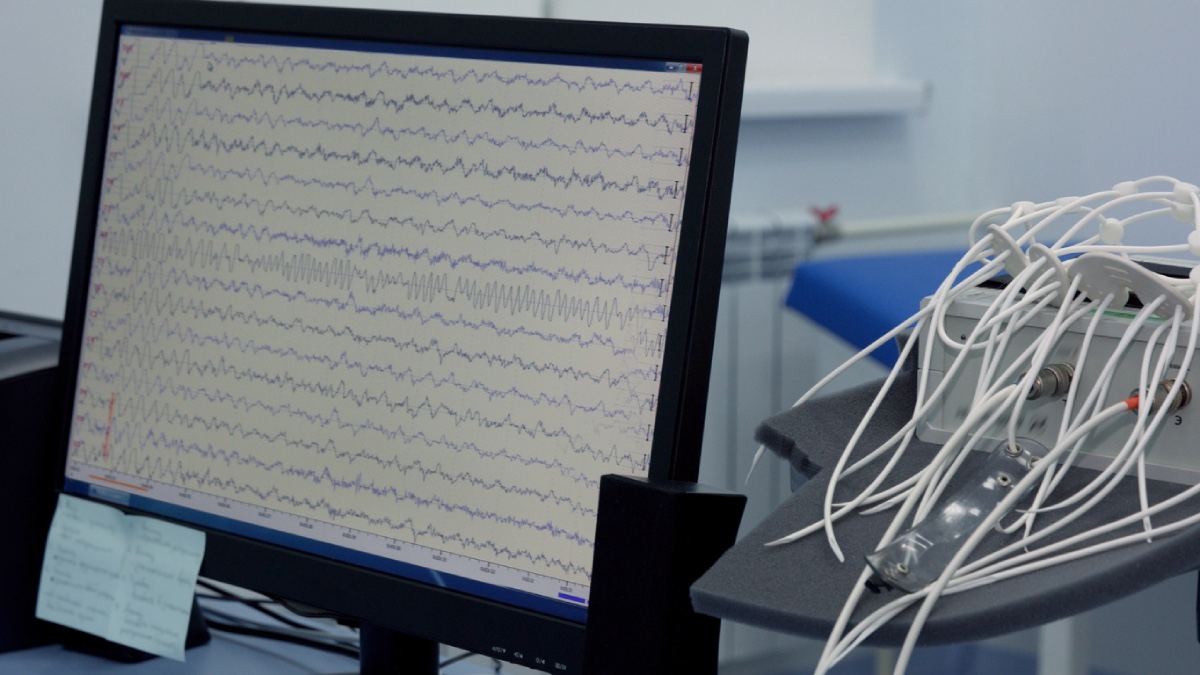
Disclaimer: This article is intended solely for informational and educational purposes only. It does not constitute medical advice.
In medical communication, healthcare workers frequently use euphemisms or metaphors to explain physiological or pharmacological processes in ways that patients can more easily understand. One common example is using “putting someone to sleep” to describe the induction of general anesthesia. Although this phrase is simple and reassuring, neurological research demonstrates that natural sleep and general anesthesia are physiologically distinct states.
The tendency to equate sleep with anesthesia partly reflects the common misconception that sleep is simply a reduced state of arousal that can be induced whenever consciousness is suppressed. Sleep, however, is a highly regulated biological process involving interactions among circadian timing, homeostatic sleep pressure, and multiple neural circuits that control arousal and sleep architecture. It is not merely the absence of wakefulness.
The mechanisms that produce sleep and general anesthesia also differ fundamentally. Sleep is regulated in part by the circadian system, whose principal pacemaker is the suprachiasmatic nucleus (SCN) of the hypothalamus. Light detected by the retina provides information about the external day–night cycle to the SCN, which helps regulate melatonin secretion by the pineal gland. Melatonin contributes to the timing of sleep, but the pineal gland itself is not the body’s primary circadian clock. Once sleep occurs, the brain remains active, cycling through organized stages of non-rapid eye movement (NREM) and rapid eye movement (REM) sleep. These stages support multiple physiological functions, including memory-related processes and the regulation of neural and metabolic activity.
General anesthesia, in contrast, is a pharmacologically induced and medically controlled alteration of consciousness. Anesthetic drugs act on specific molecular and neural systems to produce unconsciousness, amnesia, immobility, and, depending on the agents used, other effects such as analgesia. Although general anesthesia can produce slow-wave and other oscillatory patterns that resemble aspects of sleep, it does not simply reproduce normal sleep architecture. Research indicates that anesthetic-induced changes in neural activity can disrupt large-scale communication and information integration in ways that differ from natural sleep. The precise effects vary according to the anesthetic agent, dose, and depth of anesthesia.
Recent research further complicates the traditional comparison between general anesthesia and sleep. A 2026 study of propofol anesthesia found neural features that resembled both sleep and disorders of consciousness, including coma, while also identifying patterns distinctive to the anesthetized state. These findings suggest that anesthesia should not be understood as simply “deep sleep,” but neither should it be characterized as a complete shutdown of brain activity or as identical to coma. Instead, anesthesia is a complex, pharmacologically induced brain state with partially overlapping but ultimately distinct relationships to both sleep and disorders of consciousness.
The clinical euphemism “putting someone to sleep” therefore obscures an important physiological distinction. Sleep is a naturally regulated and biologically necessary state, whereas general anesthesia is a reversible, drug-induced alteration of consciousness. This distinction is clinically relevant because postoperative sleep disruption is common and may be influenced by anesthesia, medications, pain, inflammation, psychological stress, hospitalization, and circadian disruption. Recognizing the difference between sleep and anesthesia can therefore improve patient communication and scientific understanding. A more precise understanding of the anesthetized brain may ultimately help clinicians reduce postoperative cognitive and sleep-related complications while maintaining the unconsciousness and other physiological effects required for safe surgery.
References
- Akeju, O., & Brown, E. N. (2017). Neural oscillations demonstrate that general anesthesia and sedative states are neurophysiologically distinct from sleep. Current Opinion in Neurobiology, 44, 178–185. https://doi.org/10.1016/j.conb.2017.04.011
- Helfrich, J. D., Szaflarski, J., Nævra, M. C. J., Romunstad, L., Walker, M. P., Mander, B. A., Knight, R. T., Larsson, P. G., & Helfrich, R. F. (2026). Spectral mapping reveals a resemblance of the anesthetic brain state to both sleep and coma. Proceedings of the National Academy of Sciences, 123(21), e2514098123. https://doi.org/10.1073/pnas.2514098123
- He, Y., et al. (2024). Mapping the global surge in postoperative sleep research from 2014 to 2023: Bibliometric analysis. World Journal of Clinical Cases, 12(15), 2542–2555. https://doi.org/10.12998/wjcc.v12.i15.2542