
Tourniquet-Free Total Knee Arthroplasty
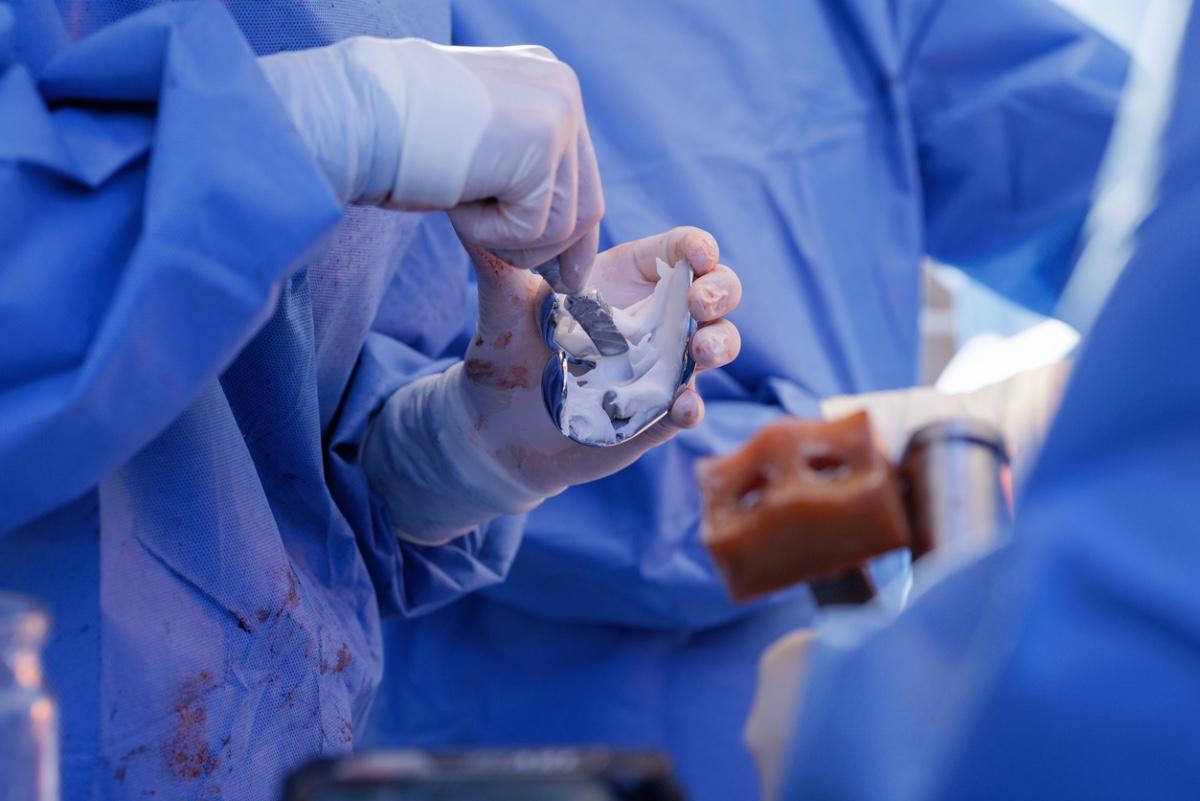
Total knee arthroplasty (TKA) is commonly performed with a pneumatic tourniquet to provide a bloodless surgical field and potentially reduce intraoperative blood loss. However, tourniquet use has also been associated with postoperative pain, muscle injury, thrombotic complications, and delayed functional recovery. As enhanced recovery pathways and blood conservation strategies have become increasingly common, tourniquet-free total knee arthroplasty provides an alternative approach that produces non-inferior surgical outcomes in many cases while avoiding tourniquet-related morbidity.
The primary rationale for tourniquet use is to minimize intraoperative bleeding and improve visualization. However, the relationship between tourniquet use and total perioperative blood loss is complex. Although tourniquets reduce blood loss during the surgical portion of the procedure, reactive hyperemia following deflation can increase postoperative bleeding. Additionally, tourniquet application may contribute to ischemic muscle injury and increased postoperative pain. Tourniquet-free TKA eliminates these physiologic effects while allowing continuous tissue perfusion throughout the procedure.
Successful tourniquet-free total knee arthroplasty requires a multimodal blood conservation strategy. Tranexamic acid (TXA) is particularly important because it inhibits fibrinolysis and reduces perioperative blood loss and transfusion requirements. TXA may be administered intravenously, topically, or through a combination of routes. Modern surgical techniques, including meticulous electrocautery, efficient surgical exposure, and careful hemostasis, can further reduce blood loss. These measures allow many patients to undergo TKA without requiring a tourniquet while maintaining an acceptable operative field.
Multiple studies have evaluated outcomes associated with tourniquet-free TKA. Randomized trials and meta-analyses generally demonstrate that avoiding a tourniquet may increase intraoperative blood loss but does not necessarily increase total blood loss or transfusion requirements when TXA is used. Tourniquet-free procedures may also be associated with less postoperative pain and improved early quadriceps function. Avoiding ischemia-related muscle injury may facilitate earlier ambulation and participation in physical therapy, which are important components of contemporary enhanced recovery protocols.
In addition to tissue ischemia, prolonged tourniquet inflation can produce nerve injury and postoperative swelling. Tourniquet use has also been associated with increased postoperative thromboembolic risk in some studies, although the clinical significance of this association remains uncertain. Patients with peripheral vascular disease or other conditions in which prolonged limb ischemia is undesirable may particularly benefit from a tourniquet-free approach.
Despite these advantages, tourniquet-free total knee arthroplasty is not universally appropriate. Increased intraoperative bleeding can impair visualization, particularly during technically difficult procedures or in patients with significant bleeding risk. Additionally, surgeon experience and meticulous hemostasis influence the extent of intraoperative bleeding. Patient-specific factors, including anticoagulant use, coagulopathy, vascular disease, and the complexity of the planned procedure, should be considered when determining whether to omit the tourniquet.
Evidence suggests that, in most patients, tourniquet-free TKA is a safe and effective technique when combined with appropriate blood conservation measures, particularly TXA. Although tourniquet use may reduce blood loss during portions of the operation, eliminating it can improve early postoperative recovery without substantially increasing transfusion requirements.
References
1. Alcelik I, Pollock RD, Sukeik M, Bettany-Saltikov J, Armstrong PM, Fismer P. A comparison of outcomes with and without a tourniquet in total knee arthroplasty: a systematic review and meta-analysis of randomized controlled trials. J Arthroplasty. 2012;27(3):331-340. https://doi.org/10.1016/j.arth.2011.04.046
2. Zhang W, Li N, Chen S, Tan Y, Al-Aidaros M, Chen L. The effects of a tourniquet used in total knee arthroplasty: a meta-analysis. J Orthop Surg Res. 2014;9:13. https://doi.org/10.1186/1749-799X-9-13
3. Ejaz A, Laursen AC, Kappel A, et al. Faster recovery without the use of a tourniquet in total knee arthroplasty. Acta Orthop. 2014;85(4):422-426. https://doi.org/10.3109/17453674.2014.931197
4. Harsten A, Bandholm T, Kehlet H, Toksvig-Larsen S. Tourniquet versus no tourniquet on knee-extension strength early after fast-track total knee arthroplasty: a randomized controlled trial. Acta Orthop. 2015;86(5):554-559. https://doi.org/10.1016/j.knee.2014.12.010
5. Aguilera X, Martinez-Zapata MJ, Hinarejos P, et al. Tourniquet use and major cardiovascular complications in patients undergoing total knee arthroplasty: a meta-analysis of randomized controlled trials. J Arthroplasty. 2015;30(10):1854-1860. https://doi.org/10.1007/s00167-010-1342-7